

 ” double feature is a loving ode to exploitation films, those low budget flicks of the past that used shocking content to lure a voyeuristic audience hungry for cheap thrills. Rather than add to the endless lists of examples of pure Grindhouse currently clogging up the internet tubes, we thought we’d count down the top ten films that (intentionally or not) straddle that fine line between mainstream cinema and the fodder of the seedy Times Square cinemas of old!
  10) Cherry 2000
 (1987)
The post-apocalyptic “Cherry 2000” tells the tale of a man obsessed with finding an exact replacement for his broken “sex machine,” the titular (no pun intended) android (Pamela Gidley). The lust-lorn Sam (David Andrews) hires a “tracker” named E. Johnson to help him get through the lawless, violent “Zone” in her Ford Mustang and find his new toy. What makes this movie such an odd stew is that it turns into an old-fashioned romance, and Johnson is played by the highly-unthreatening Melanie Griffith, a mom-friendly Mad Maxine who seems about as uncomfortable toting a giant gun as she does amidst the Hasidic Jews in 1992’s “A Stranger Among Us
 .”
.”9) Showgirls
 (1995)
Screenwriter Joe Eszterhas was paid a phenomenal $3.7 million to write this soft-porn tale of a small town girl who comes to Las Vegas and lap-dances her way to the top. Starring former TV teen Elizabeth Berkley as the usually-naked Nomi Malone, the NC-17 film (directed by Paul Verhoeven, the man behind “Basic Instinct
 ”) was critically drubbed and failed to find an audience… until it was released on video and its broad, unintentional camp began to develop a cult following. The film’s studio, MGM retroactively began marketing the movie as an intentional goof, playing up its reputation as one of the worst films ever made as a selling point.
 8) House of 1000 Corpses
 (2003)
Like “Grindhouse,” Rob Zombie’s first foray into film is an intentional nod to the gory exploitative horror films of the 1970s. So we have to wonder… when Universal pictures gave a green light to the project, what were they expecting… “Return to Witch Mountain?” After the blood, guts and flesh earned the movie an NC-17 in 2000, the studio dropped out, and it took three years for the film to find a distributor, after which many critics either panned or ignored “House” not on its own merits so much as the genre it ostensibly celebrates. Buncha wusses.

 (1967)
“The Trip” is a typically low-budget release from American International Pictures, but it’s the talent involved that makes it stand out. The movie tells of Paul Groves, a man who seeks to escape the pain of his horrible divorce by taking an LSD trip, viscerally depicted for the bulk of the film. Check out the star quality of the players: Peter Fonda stars as Groves alongside Dennis Hopper (two years before the two made “Easy Rider
 ”), Susan Strasberg and Peter Bogdonavich, in a screenplay written by none other than Jack Nicholson. True, most of those names didn’t carry the weight they do today, and it’s not like it’s subject matter they would later avoid, but the confluence of all that star wattage gives this movie an unexpected retroactive weight.
 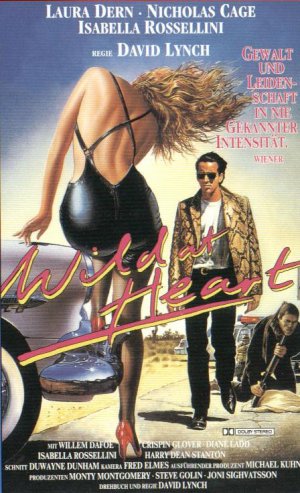 6) Wild at Heart
 (1990)
Director David Lynch has always enjoyed pushing envelopes, but with 1990’s “Wild at Heart,” some felt that he had finally gone too far. The twisted road movie follows the recently paroled Sailor (Nicolas Cage) and his lady love Lula (Laura Dern), on the lam from Lula’s evil mother Marietta (Diane Ladd, Dern’s actual mom) who has set numerous bounties on the head of the boy who took her baby. Mysterious toilet fluids, squishy skull holes, puddles of vomit, gloopy decapitation by shotgun, and some really ugly teeth are only some of the disturbing imagery that caused many to cry foul when the movie won the Palme d’Or at the Cannes Film Festival. In fact, the guy who wrote the #1 film on our list called “Wild at Heart” “repulsive and manipulating.”
5) Twilight Zone: the Movie
 (1983)
Ultimate A-lister Steven Spielberg produced this big budget adaptation of Rod Serling’s classic ‘60s TV show
 , an anthology film that fits on our list for one infamous reason. In one story, Vic Morrow plays a bigot who is transported to various situations where he’s the victim of racism. During the filming of a scene in which Morrow finds himself in the midst of the conflict in Viet Nam, carrying two small children through a lake while US helicopters raze their village, all three actors were killed when an explosion caused a chopper to crash on top of them. Despite the fact that the children were working illegally, nobody was convicted of any wrongdoing in the incident. While the shots of Morrow and the children being killed were obviously not used, “Twilight Zone: the Movie” nonetheless retains a discomfiting air of being the only major studio snuff film.
 (1974)
1974’s “Death Wish” played off of the ever-growing fear of urban crime. Based on a book by Brian Garfield, the movie stars tough guy Charles Bronson as Paul Kersey, a man who gets a gun and goes on a vengeful vigilante spree after criminals kill his wife and rape his daughter. The movie was (and remains) completely polarizing, with some critics unable to look past the film’s right wing politics. It is interesting to imagine how the movie would’ve played if the far less threatening Jack Lemmon had played Kersey, as was once planned.
 3) The Beat Generation (1959)
MGM released this noirish cops vs. rapist tale set amidst the seedy Beatnik culture of the late ‘50s, but it’s about as hip (or hep) as your drunk uncle doing karaoke to Billy Joel. Despite the presence of the va-va-voomy Mamie Van Doren, a poetry-spouting Vampira and Louis Armstrong (who, while undeniably cool, was never really a part of the Bop scene), the movie can’t hide its distaste for “these kids today” and is remarkably bleak. The New York Times called the film “excruciating and tasteless,” but the critic reveals his prejudice against the scene and its music, patronizingly writing about beatniks “writhing to ‘noise’ records” in a coffee house “that seems more like a looney bin.”
2) The Warriors
 (1979)
“The Warriors” has gained such a cult film reputation that most people probably don’t even realize it was produced by a major studio (Paramount). Taking inspiration from both vintage gang flicks like 1957’s “The Delinquents” and the more glamorous “West Side Story
 ,” mixed with the gritty realism of the setting of late ‘70s New York, director Walter Hill created the ultimate gang movie as the “Armies of the Night” face off against the cops and each other. True, the violence is toned down from Sol Yurick’s original novel
 , and the matching uniforms (designed to make it easier for viewers to tell the various gangs apart) add a cartoony element to the film, but the film’s stlylized action was effective enough that the movie was blamed for inciting actual incidents of gang violence.
 (1970)
Boob-King Russ Meyer’s first stab at mainstream moviemaking boasts a screenplay by none other than thumbslinging film critic Roger Ebert. The movie (only nominally a sequel to 1967’s soapy “Valley of the Dolls
 ”) is the story of the Carrie Nations, an all-girl band that moves to Los Angeles and gets sucked into a world of sex, drugs, depravity and death when they hook up with the dangerous, flamboyant record producer “Z-Man” (John LaZar). Satirizing Hollywood, conventional attitudes about sex, the music business and even the Manson murders, the film received an X rating and sent shockwaves through its studio, 20th Century Fox. It has since gone on to become one of the quintessential cult films, inspiring everything from bands such as the New York Dolls
 and My Life with the Thrill Kill Kult
 to the “Austin Powers
 ” films. Check it out and see if you don’t find yourself screaming, “This is my happening, and it freaks me out!!!”
 And then, of course, there’s Mel Gibson’s “The Passion of the Christ
 ” (2004), but we didn’t wanna stir up that hornet’s nest again. But if you’re one of the people who thought THAT film was controversial, wait until you see Danny Boyle’s upcoming Easter-themed sequel, “Three Days Later!” Now THAT’S exploitation!
 _________________________________________________
ORIGINALLY POSTED in REWIND on MTV.COM, April 2007


 ” is an acronym for Teenage Mutant Ninja Turtles, the comic book – cartoon – action figure – movie phenomenon spawned in that most awesomely plastic of decades, the 1980s. When the Turtles last blasted across the silver screen, they were foam and latex puppets and costumes worn by little people. In the new film, they are, naturally, CGI creations. Not that anyone ever thought Michelangelo, Donatello, et al were actual flesh and shell beings, but the updated Turtles raise the question: What’s more believable? An actual, if artificial construct… or a computer generated image?
 ” debuted in 1933, Willis O’Brien’s startling effects of the stop-motion ape climbing the Empire State Building stunned audiences. They had simply never seen something so fantastic interacting with the everyday. To look at the film today, the stop motion animal is more quaint than terrifying, with its jerky movement and visible handprints of the manipulating animators on its fur. But for diehard fans, the original remains the quintessential Kong, despite (or, depending on your sensibilities, because of) its technical limitations.
  made headlines by attempting to use an actual full size Kong robot. In the end, the 40-foot, 1.7 million dollar behemoth was stiffer than the 1933 puppet, getting a full minute of screen time. So the filmmakers ended up going with make-up / effects creator Rick Baker in a monkey suit, which looked like, well, an actor in a monkey suit (especially since he didn’t bother to stoop like an ape when he walked).
  ” (2005). Ostensibly an ode to the original 1933 film, Jackson’s epic was chock full of giant and/or icky movie monsters and a scarred, dinoflea-ridden, fully realized Kong (played in motion-capture by Andy Serkis). And while the film was visually dazzling, many critics felt that it was TOO much, particularly in the scenes on Skull Island, populated with dozens, nay, hundreds of digital creatures. Jackson seemed to fall victim to Lucasitis: an overwhelming inflammation of too many digital effects, culminating in a lack of focus and often leading to eyestrain or headaches and an overall lack of emotional connection. In the end, Jackson’s “Kong” did okay, but wasn’t as enthralling (nor emotional) as its inspiration.
 ” series, “
 ,” introduced the character of Jedi Master Yoda, brought to life by Muppets alumnus Frank Oz in the form of a highly intricate puppet. Despite sounding like a cross between Sesame Street’s Grover and Kung Fu’s Master Po, Yoda became an instantly beloved part of the Star Wars universe. It was obvious that Yoda was a puppet, but it didn’t matter. Yoda was real because, well, Yoda WAS REAL. When he reaches out and pinches Luke Skywalker’s arm to explain how the force isn’t bound by simple flesh, the interaction actually happens, to the benefit of both actor and audience.
  ,” but by 2002’s “
 ,” Frank Oz’s participation was cut to mere voice work. Yoda was now a full CGI creation, better able to leap into the air and do (very silly looking) light saber battle with Count Dooku, but he was somehow… less believable. The limitations placed on a puppet seemed to better fit a 900 year-old green dwarf than the airy weightlessness of ones and zeroes. It’s sad to speculate that at some point, George “the Terrible Tinkerer” Lucas could go back and replace the puppet Yoda in all of the films with a CGI creation.
 ” (1989), “
 ” (1991) and “
 ” (1999), but it wasn’t until Ang Lee’s “
 ” that the humanoid star of a movie was computer generated (no, “Casper” doesn’t count). While the general public had accepted the bodybuilt but still human Lou Ferrigno as Bill Bixby’s angry alter-ego in the “
 ” TV show of the 1970s, the comic book basis was in fact a far more imposing creature, a tank-sized beast that couldn’t even find pants at the Big & Tall Shop (especially not in purple). But, despite a gargantuan size, the bigger, badder movie Hulk failed to connect with an audience. A convoluted, overly serious script was primarily to blame, but could the fact that the Hulk wasn’t “real” have had something to do with it?
  .” In the Marvel Comics universe, the Thing and the Hulk are about the same size, and have gone green-toe-to-orange-toe many times. In the movies, Michael Chiklis buried under makeup just isn’t as imposing (nor as tragic) as the character needs to be. Especially considering the character’s lack of human flesh and hair (two of the hardest things to realistically animate), the Thing’s rocky form seems to beg for the CG treatment (after all, both the flamed-on Human Torch and the Silver Surfer are fully CG in the upcoming “
 ” sequel).
 ” is in a way a curious example movie effects coming full circle. In the
  of the 1940s, when the Man of Steel (played by Kirk Alyn) would take flight, the live action Superman would suddenly be replaced with a crudely animated character. That obvious cartoon has very little in common with the sophisticated CGI Superman used in many flying shots in “Returns.” Still, while audiences knew that computer graphics were being used, it was the combination of those shots with actual physical effects of Brandon Routh on cables and gimbals that made it work. If you don’t know which shots are “fake” and which are “real,” it becomes easier to get lost in the sum total.
  .” That movie drew audiences to the theater with promise of making you believe, for the first time, that a man could fly, and it did, with nary a computer involved.